Satellite Link: Ukraine Confirms Full Starlink Speeds Restored
Ukrainian leaders confirm the return of high-speed satellite connectivity after a brief period of restrictions that impacted military drone operations and logistics.
By Emily Carter ·
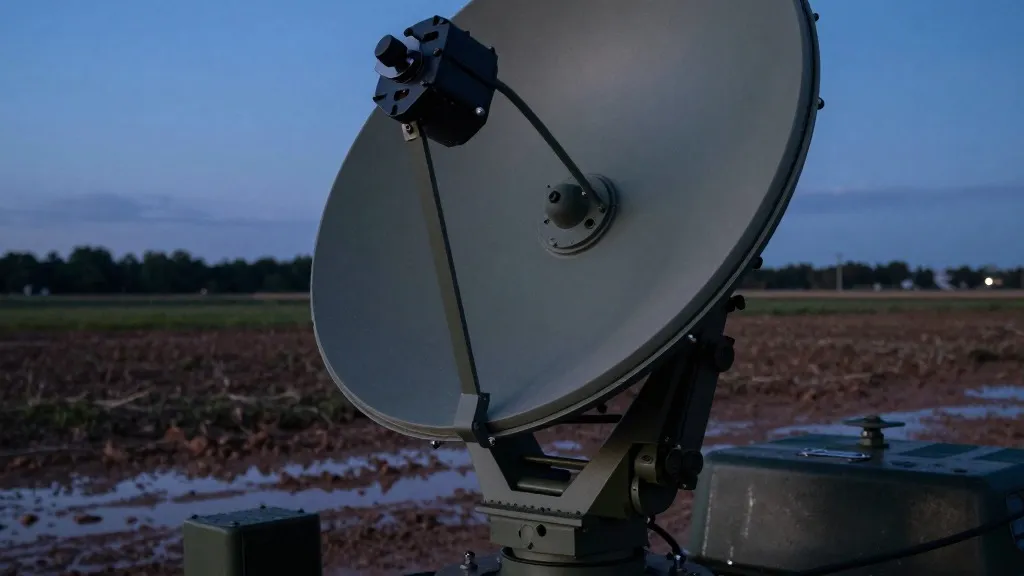
Ukrainian defense authorities have confirmed that satellite internet speeds have returned to normal levels, ending a period of restricted access that complicated military operations. Defence Minister Yevhenii Khmara announced the resolution in a public statement on Saturday, marking a significant shift in the technical capabilities available to the armed forces.
According to Khmara, the network now supports speeds exceeding 400km/h, a metric that indicates full restoration of service capacity. He emphasized the critical nature of this upgrade for frontline units, noting its importance for drone coordination, logistical planning, and general communications. The ministry relies heavily on this infrastructure to manage operations across the conflict zone.
The recent connectivity issues arose following accusations that US President Donald Trump directed Elon Musk to impose limits on the service. Under those reported restrictions, drones lost their signal once they reached 161km/h. Although Trump denied issuing such an order, he later acknowledged that Musk had corrected the situation. Kyiv uses both the commercial Starlink platform and the military-grade Starshield system to maintain operations.
The dispute occurred against a backdrop of broader diplomatic friction between Washington and Kyiv. Tensions flared over Ukrainian strikes on Russian oil facilities, a point of contention as the US midterm elections approach next month. Trump has recently eased certain sanctions and agreed to import Russian diesel, a move that drew criticism from Ukraine and its European partners. The two sides remain divided on the economic impact of these strikes, with Kyiv arguing they are essential for reducing Moscow's war funding, while Trump contends they have driven up global fuel prices.
Zelensky stated that the US had also hinted at reducing intelligence sharing if the strikes continued, a claim Trump rejected. The satellite network, comprising approximately 10,000 low Earth orbit satellites, is vital for Ukrainian forces, particularly in remote areas. While the civilian service is widely used, the more secure Starshield system is managed by the US military, a factor Musk suggested may have influenced the recent technical hiccups.
Combat operations continue on the ground despite the technical resolution. Russia’s defence ministry reported on Saturday that air defenses intercepted 616 fixed-wing drones, with impacts recorded in several regions including Crimea. Local officials in the annexed territory reported temporary disruptions to electricity and water services following the attacks. In response, Ukrainian forces said they targeted a missile parts manufacturer, a chemical facility, and an aircraft at an airfield within Russian borders.
Ukrainian authorities also detailed the scale of Russian aggression over the previous day, citing 88 air strikes. These attacks involved the use of 309 glide bombs and over 10,000 kamikaze drones, highlighting the intense pace of the conflict on the eastern front.
Source: BBC News