U.S. Border Officers Inspect 52,080 Traveler Devices in First Nine Months
Customs and Border Protection data show a 32 percent jump in electronic device inspections, though the agency withholds details on location and citizen status.
By Jian Chen ·
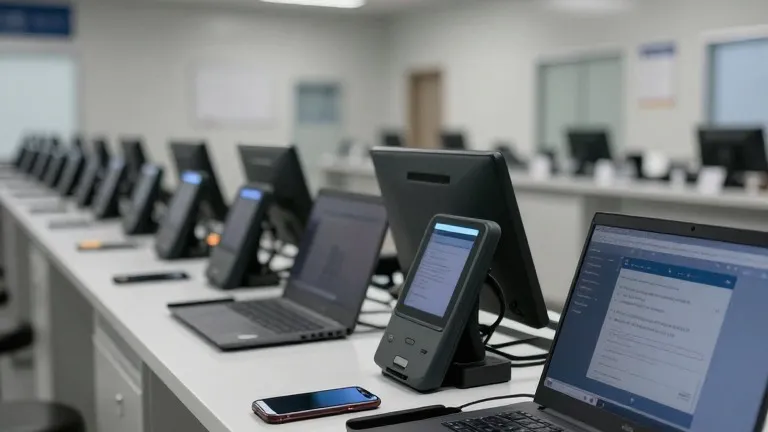
U.S. Customs and Border Protection agents inspected 52,080 electronic devices belonging to travelers between October 1, 2025, and June 30, 2026. This figure marks a 32 percent increase over the 39,251 devices examined during the same period in the prior fiscal year. The pace of inspections places the agency on track to exceed the previous annual high of 55,424 devices recorded in fiscal 2025.
The agency categorized 47,517 of these actions as basic searches, a process that does not require reasonable suspicion of wrongdoing. The remaining 4,563 were advanced searches, which permit officers to analyze or copy data when they suspect unlawful activity or national security threats. Despite the volume of inspections, CBP declined to disclose the geographic breakdown of these actions. It did not specify how many occurred at the Canadian border versus the Mexican border, nor did it detail the split between airports and land crossings.
The agency also withheld the total number of travelers who entered the country during this timeframe. It further omitted data on how many inspections involved U.S. citizens compared to non-citizens, information that typically appears in annual reports. Jessica Turner, a CBP public affairs officer, addressed the scale of the operation in an email to reporters. She noted that in 2025, device searches affected a tiny portion of the 419 million travelers who crossed the border. Turner stated that only 0.01 percent of travelers had their devices searched year-over-year, a figure she described as consistent with trends since 2021.
Civil liberties advocates argue that the rising numbers warrant closer scrutiny. Esha Bhandari, director of the American Civil Liberties Union’s Speech, Privacy and Technology Project, said the lack of explanation from the government makes it difficult to assess the reasons for the surge. Bhandari contended that when the government holds such power, it tends to use it in ways that harm traveler privacy. She described the aggregate data as insufficient for understanding specific patterns, citing anecdotes of travelers being questioned about political opinions, writing, or religious practices.
In January 2026, CBP updated its guidelines to expand the definition of searchable devices. The new rules include flash drives, SIM cards, GPS systems, unmanned aircraft, vehicle infotainment systems, and smartwatches. The update also listed specific targets for detection, including digital contraband, transnational theft of proprietary information, and smuggling of narcotics or firearms. Bhandari characterized these changes as minor procedural adjustments. She suggested the rise in inspections may stem from technological advances and a failure of federal courts to limit government authority.
Laura Dawson, executive director of the Future Borders Coalition, emphasized that the data lacks context without knowing where searches occurred and how many people crossed. She noted that inspections happen at seaports and airports, and the World Cup held this summer may have diversified the pool of visitors. Dawson also pointed to increased border security focus and closer cooperation between Canadian and U.S. services on issues like human smuggling and the Ryan Wedding case. She described greater scrutiny at the border as a positive development in many respects.
Despite viral stories on social media, Dawson maintained that device searches remain rare. Her calculations indicate that one in 9,000 crossings results in a U.S. inspection. On the Canadian side, the rate is approximately one in 14,000. Canadian officials have searched a smaller share of devices than their U.S. counterparts in recent years, with numbers trending downward. The Canada Border Services Agency stated that its 2026 statistics are not yet available.
Source: CBC News