Tom Barrack Accuses Druze Leader of Using Israeli Image to Divide Community
The US special envoy claims a sheikh in southern Syria is capitalizing on perceived backing from Washington and Tel Aviv to consolidate power and fund armed groups through the drug trade.
By Ahmed Mansour ·
Five rounds of border talks have taken place between Israel and Syria since May 2024, yet the path toward a final agreement remains fraught with internal political friction. US Special Envoy Tom Barrack recently pointed to these ongoing negotiations as a sign of progress, though he warned that trust is still fragile. His latest comments shift the spotlight away from the two national governments and toward a specific spiritual leader in the Druze community of southern Syria. Barrack alleges that this figure is manipulating external perceptions to target his own people.
During an interview with commentator Mario Nawfal, which was shared on social media on Friday, the envoy, who also serves as the ambassador to Turkey, offered a pointed critique of the local power dynamics. He stated that a prominent sheikh in Sweida is leveraging the idea of Israeli and American support to persecute other members of the Druze community. Barrack was careful to distinguish his target from the state of Israel itself, insisting that the issue lies with how one local leader exploits the appearance of alignment with powerful neighbors to advance his own agenda.
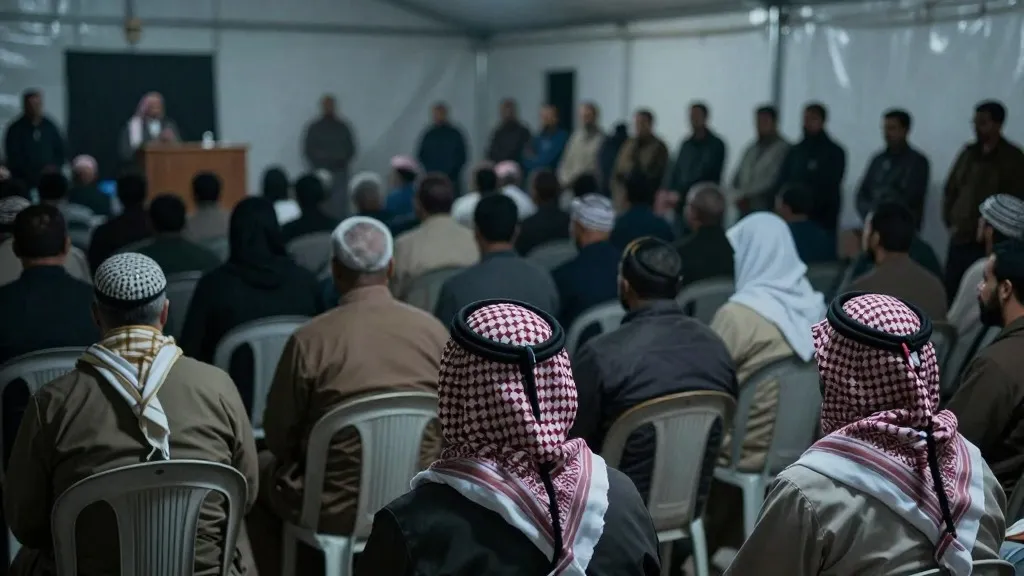
Although Barrack did not use a surname in the interview, the timing of his remarks aligns with the rising profile of Hikmat al-Hijri. This spiritual leader in Sweida has openly opposed the authority of Damascus and called for a fully independent administration for the Jabal Bashan region. Tensions escalated earlier this month when supporters of al-Hijri raised Israeli flags during a rally in Sweida. The event coincided with the anniversary of the October 2023 attacks, a symbolic act that highlighted the complex and often contradictory alliances in the area.
The envoy firmly denied that Washington has explicitly endorsed the sheikh’s position, labeling such claims as absolutely wrong. However, he pointed to the economic reality on the ground to explain how local armed factions sustain themselves. Barrack suggested that Druze groups in the province are financing their weapons through the captagon trade. He described the stretch of land from Sweida to Daraa as a major global hub for the manufacture and sale of the illicit drug, drawing a direct comparison to methamphetamine production. In his view, the revenue generated from this trade provides the necessary funds to arm these local forces effectively.
The Bashan administration, which is affiliated with al-Hijri, reacted with strong anger to these economic accusations. In a public statement, the group denied that Jabal Bashan serves as a center for captagon production. They argued that the community has historically stood on the front lines against smuggling networks, noting that they have paid a high personal cost. The statement emphasized that young men from the community have been sacrificed in the struggle to eliminate the scourge of illicit drugs, challenging the envoy’s characterization of the region.
The political stakes have risen significantly since al-Hijri declared in May 2026 that the move toward self-determination is irreversible. His goal is to establish an administration in Jabal Bashan that is entirely distinct from the government in Damascus. This push for autonomy has intensified scrutiny of the region’s internal politics and its evolving relationship with neighboring powers. The declaration has forced observers to reconsider the balance of power in southern Syria and the potential for future secessionist movements.
Barrack also addressed the broader relationship between Israel and the Druze, arguing that the alignment goes beyond simple political interference. He highlighted the communities in the Golan Heights and along the border, noting that they have paid a significant price as allies alongside Israeli Defense Forces soldiers. Israel has repeatedly framed its military interventions in southern Syria as efforts to protect the Druze, a narrative that was underscored by strikes against Syrian government forces in Sweida in July 2025. This historical context adds a layer of complexity to the current diplomatic discussions.
Regarding the wider regional dynamics, the envoy observed that Syria has exercised notable restraint in response to Israeli incursions. He warned that any aggressive retaliation could trigger a wider conflict, suggesting that Damascus has been patient in allowing Israel to maintain what it perceives as a buffer zone. This patience is viewed as a strategic choice to prevent the fire from exploding into a larger war, even as the Druze conduct themselves in ways that some observers view as inappropriate. The goal is to stabilize the border while internal issues are resolved.
Looking ahead, Barrack expressed optimism that Israel and Syria will eventually reach an understanding, despite continuing mistrust. He noted that Syrian President Ahmed al-Sharaa has made it clear he does not desire a confrontation with Israel. However, the envoy acknowledged that Israel remains wary of Syria’s new leadership. This wariness is attributed to Sharaa’s past as a fighter with the al-Nusra Front and the presence of foreign fighters in army divisions deployed near the border. These factors continue to shape the cautious nature of the ongoing negotiations.
Source: Middle East Eye