Emergency Supplies: UK Residents Stockpile Amid Official Warnings
Government advice to hold three days of provisions has spurred a wave of household preparation driven by security and climate concerns.
By Dmitri Sokolov ·
A quiet shift is underway in British shopping baskets as citizens begin stocking up on survival goods.
On Thursday, government officials launched the Be Ready campaign, a public information push urging households to maintain a reserve of supplies sufficient to last seventy-two hours. The advice is intended to help the public withstand a spectrum of potential disruptions, including threats attributed to Russian state-sponsored terrorism and the ongoing impacts of the climate crisis. While the formal announcement arrived this week, ministers have been issuing similar signals for several months, prompting early movers to act before the campaign went live.
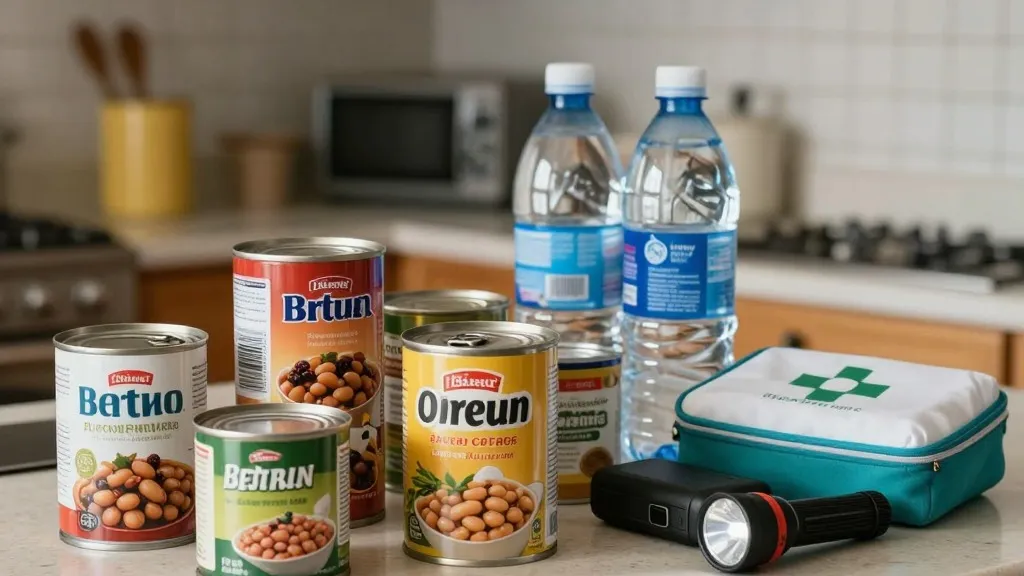
In Hythe, Hampshire, Lawrence Barratt has been quietly building a reserve for about a fortnight after encountering government guidance online. He adds tinned and dried items, such as beans, soups, chilli con carne, noodles and rice, to his weekly purchases. Barratt plans to cook these using bottled water, which he is also gathering in increments, aiming to sustain two people for three days. His preparations include a first aid kit, a battery-powered FM radio and a torch. He also possesses a portable power bank originally intended for camping trips, which he believes could charge phones, run a television and power a small fan heater. Memories of the supply chain panic during the first lockdown in 2020, when shelves were stripped of pasta and toilet roll, also factored into his decision.
Others began their preparations months ago. Marco Camurri, from Greenwich in London, started gathering pasta, passata, stock cubes, tinned food, bottled water, medicines and toilet paper after reports surfaced concerning supply chain disruptions linked to El Niño. Camurri, who has relatives in continental Europe, noted the family could relocate temporarily if the UK entered a conflict or faced infrastructure failure threatening their employment. He maintains a stockpile of wood in his garden to boil water or cook food if necessary, alongside matches, lighters and charged flashlights. The household aims to keep their fuel tank above fifty percent, equivalent to about three hundred miles of driving, and tracks expiration dates on a spreadsheet to rotate their provisions.
Jack Davenport, from North Shields, also cited El Niño as a trigger for his preparations, though he finds it difficult to judge the scale of the threats facing the nation. He pointed to climate disasters, Russian shadow threats, artificial intelligence and energy-driven interest rate hikes, describing the country's physical and technological infrastructure as creaking and outdated. Davenport suggested the government aims to reduce long-term panic by framing these events as possibilities, noting that several generations have not faced hardships common before the war.
Not everyone views the guidance favorably. Deirdre O'Sullivan, from Leicester, called the advice daft, comparing it to 1970s instructions to hide under a table during a nuclear attack. She argued the advice looks inadequate for a genuine emergency, suggesting that any danger to drinking water should be anticipated more precisely and that an extreme food shortage would become apparent over a longer period. O'Sullivan likened the guidance to something 'Yes Minister would come up with to demonstrate that they have a policy in place, even if that policy is clearly totally useless.'
As of late October 2026, the debate over the adequacy of three-day reserves remains open. While some residents are actively building spreadsheets and stockpiles, others question whether such preparations address the specific nature of modern infrastructure failures or large-scale threats.
Source: The Guardian