2 million tons of oil shipped via Russia's Arctic route, far below Kremlin targets
A recent ice jam in the Vilkitsky Strait reveals logistical bottlenecks that complicate Moscow's plans to double cargo volume by 2030.
By Brianna Jackson ·
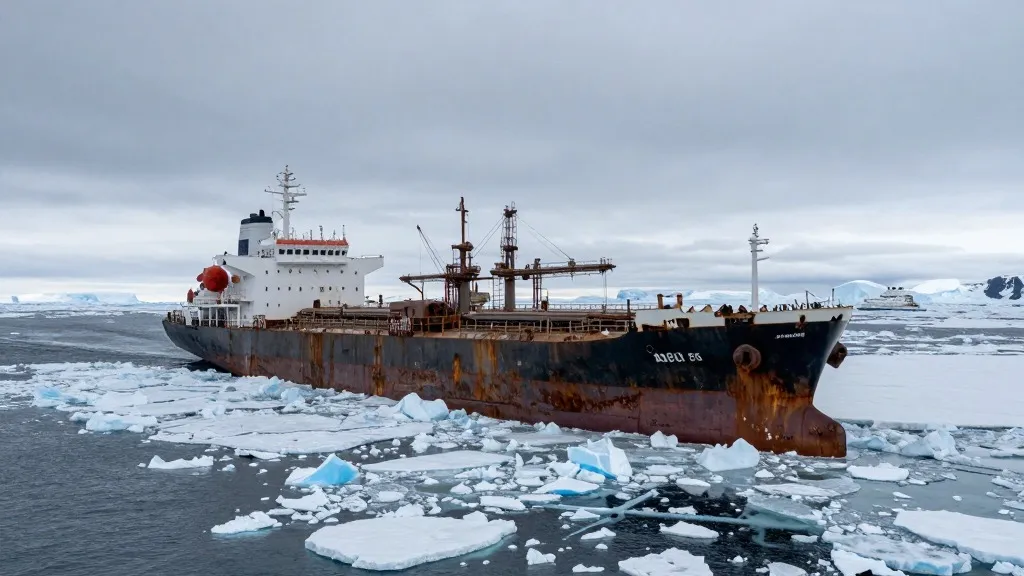
Ship owners relying on Russia's Northern Sea Route are facing tighter constraints as ice conditions prove more volatile than expected. In July, a fleet of sanctioned Russian tankers became trapped in the Vilkitsky Strait, a narrow waterway between the Siberian coast and Bolshevik Island. The vessels waited up to two weeks for nuclear-powered icebreakers to arrive from several days away. Only one tanker successfully navigated the strait. The remaining ships were forced to alter their course to reach their destinations.
The incident challenges the Kremlin's narrative of a newly accessible Arctic passage. President Vladimir Putin has long promoted the route as a secure link to global markets. Speaking in September at the launch of the Vostok Oil project on the Taimyr Peninsula, Putin stated that 37 million tons of cargo moved along the route in 2025. He predicted that number would almost double by 2030. In 2019, officials targeted 80 million tons by 2024, a goal that has not been met.
Independent data suggests the actual volume of trade remains modest. The Norway-funded Center for High North Logistics reported that Russia shipped approximately 2 million tons of crude oil along the full route to Asian destinations by the end of September. This volume equals roughly 15 million barrels. By mid-October, Reuters reported the total rose to about 20 million barrels. This represents a 50 percent increase from 2025 levels. However, that amount accounts for only about 1 percent of Russia's total seaborne oil exports.
Tomas Alexa, a senior analyst at Ambrey, described the increase as a surge from a relatively low base. He noted that Western sanctions limit Russia's ability to build and maintain Arctic-capable vessels. Spare parts and construction materials often require routing through third parties. Repair services previously provided by Norwegian, Danish, and Dutch firms are no longer available to Russian operators.
Other nations are testing the waters as well. On October 22, South Korea reported that its first container ship used the Northern Sea Route. Officials described the path as a shortcut to Europe but acknowledged difficult conditions, including large ice floes in the Bering and Vilkitsky straits. China completed several voyages on a scheduled container service to Europe for the first time this year.
Catherine Sendak of the Center for European Policy Analysis said Russia views much of the Arctic as an inner waterway. She noted that questions remain regarding potential tolls and the specific services Moscow will offer commercial vessels. Sendak expressed uncertainty about whether Russia might limit access for other actors in the future.
Security tensions are rising in the region. Kaja Kallas, the EU foreign affairs chief, stated on October 21 that the Arctic has become a front line of global power competition. NATO launched its Arctic Sentry mission in February. The United States announced plans in September to expand its military presence in Greenland.
Environmental groups warn that increased shipping by aging tankers poses specific risks. Ksenia Vakhrusheva, head of the Arctic project at Bellona, explained that oil degrades more slowly in cold conditions and can spread over ice. This process could accelerate climate change effects. Vakhrusheva added that Russia publishes no information on incidents along the route, making it difficult for independent groups to report on events in such a remote area.
Source: RFE/RL
More Business · World news · Customer Complaints · Report a business