Tesla Burns Cash on AI While Margins Recover
Operating income dropped 56% year over year as spending on artificial intelligence and the Optimus robot outpaced gross profit growth.
By Anna Nowak ·
Tesla reported a 56% drop in operating income for the third quarter, a sharp decline that highlights the heavy cost of its pivot toward artificial intelligence and robotics. Despite a recovery in margins, the electric vehicle maker is spending money faster than it is making it from core automotive operations.
The company posted revenue of $28.05 billion, which remained flat compared to the same period last year. This figure aligned closely with Wall Street expectations of $28.06 billion. Non-GAAP earnings reached $0.48 per share, beating the consensus estimate of $0.45, although this number is still down 4% from the $0.50 recorded in Q3 2025.
Total gross margin improved to 19.6%, up from 18.0% a year ago. Automotive gross margin excluding regulatory credits climbed to 18.1%, a significant increase from 16.3% in the second quarter. However, operating expenses surged 39% to $4.78 billion. Research and development spending jumped 69% to $2.76 billion as Tesla invests in its Super Intelligence program, the Optimus robot, and the Cybercab.
Capital spending more than doubled to $4.73 billion, compared to $2.25 billion a year ago. This heavy investment reduced free cash flow to $1.53 billion, down from $3.99 billion in the prior year. Tesla ended the quarter with $45.4 billion in cash and investments. GAAP net income fell 43% to $787 million, or $0.22 per share, which included a $288 million unrealized gain on bitcoin holdings.
The energy storage segment faced headwinds, with revenue falling 16% to $2.88 billion. Tesla attributed this decline partly to tariff-related customer refunds, even though energy deployments rose 10% to 13.7 GWh. In contrast, the services and other segment grew 33% to $4.61 billion, with gross profit hitting a record $734 million driven by charging and insurance sales.
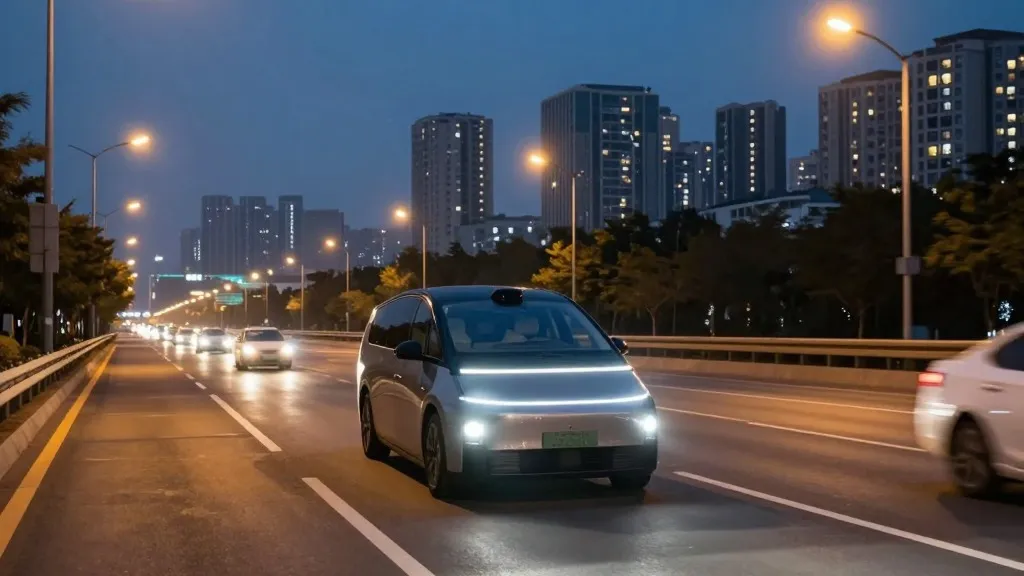
Management stated that battery availability limited vehicle production, citing the largest passenger vehicle backlog in four years. Deliveries totaled 486,532 units, down 2.1% year over year. Average selling prices continued to decline, a trend that contrasts with the supply-constrained narrative. Active FSD subscriptions reached 1.74 million, a 67% increase, while the Robotaxi service accumulated nearly 2 million unsupervised miles.
Investors are watching capital expenditure closely. Tesla has spent $13.01 billion in the first nine months of 2026, about half of the $25 billion guided for the full year. To meet that target, the company would need to spend roughly $12 billion in the fourth quarter alone. The shareholder letter did not update this guidance, leaving uncertainty about whether the 2026 plan will slip into 2027.
The earnings call with management is scheduled for 5:30 p.m. ET. The full shareholder deck is available on the company’s investor relations site. This is a developing story, and updates from the conference call will be added as they become available.
Source: Electrek