SS Richard Montgomery Masts Removed for $13M, Leaving 1,500 Tons of Bombs Underwater
Crews stripped the rusting rigging from the WWII wreck in the Thames Estuary to prevent structural collapse, while the massive cargo of munitions remains in place.
By Jacob Leary ·
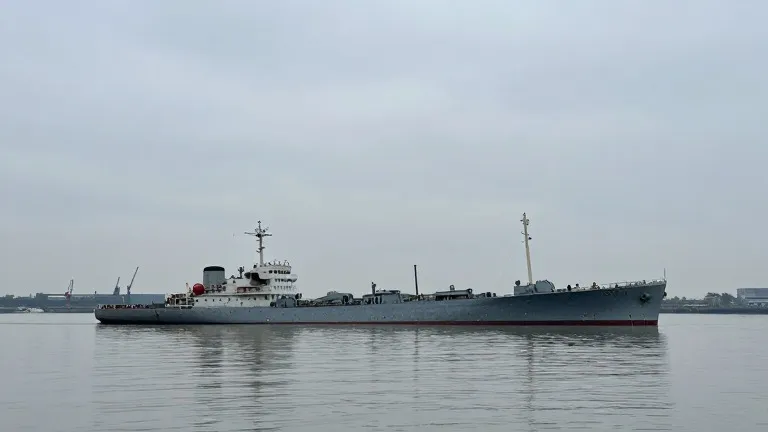
Three rusting masts no longer rise from the Thames Estuary after a team completed a complex removal project this week. The operation cost just under $13 million and finished ahead of schedule, according to U.K. maritime minister Keir Mather. The masts belonged to the SS Richard Montgomery, a World War II vessel that still holds an estimated 1,500 tons of explosives in its cargo holds.
The Montgomery was one of 2,700 ships built in the United States to support the Allied war effort. It ran aground on a sandbar off Sheerness in August 1944, about 40 miles from London. The ship broke apart during salvage attempts and sank with munitions intended for use after the D-Day landings. For decades, the masts above the waterline were a fixed landmark for local residents and passing traffic.
Recent surveys showed the structure was deteriorating. Nolan Conway, a naval architect with Resolve Marine Group, said the vessel had begun to lean. He explained that the fear was the masts could fall onto the cargo and trigger a detonation. Conway noted that some munitions are believed to have pressure fuses, meaning an impact could set them off.
The engineering team built a custom lifting frame to raise each mast without swinging or swaying. They used a remotely operated underwater diamond-wire saw to cut the masts free. The device clamps around the mast with hydraulic arms and passes the saw through, allowing the work to be done without divers entering the water.
The explosives remain in place because removing them carries considerable risks. Experts disagree on the scale of a potential explosion. Conway said estimates range from shoreline effects to a tidal wave traveling up the Thames, or a minor event that only closes a nearby shipping channel. Officials still judge the overall chance of an explosion to be low.
The three masts have been moved to the Historic Dockyard Chatham museum, where they will be displayed. Mather told the House of Commons that the masts had placed a significant load on the structure. The government will continue to monitor the site through an exclusion zone that lies about 1.5 miles off the Sheerness coast.
Source: CBS News